The Current State of Lagoon Pond
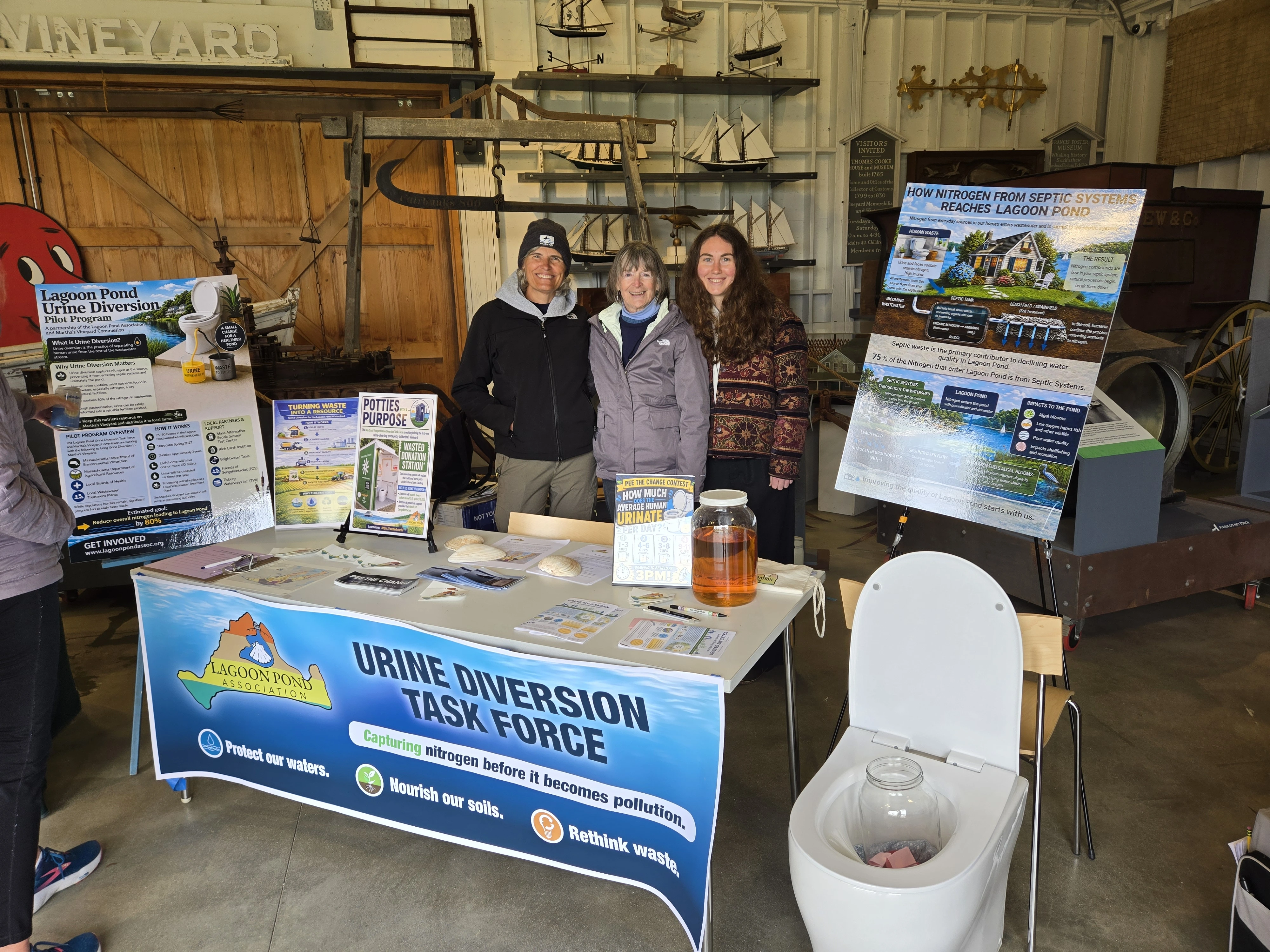
Excessive nitrogen primarily from wastewater septic systems, fertilizers and road runoff has impaired the health of Lagoon Pond.
Coastal communities, including Oak Bluffs and Tisbury, rely on clean, productive, marine and estuarine waters for tourism, recreational swimming, fishing, and boating, as well as for commercial fishing and shell fishing. Eel grass is needed for shellfish and finfish shelter and proliferation. It also improves water quality, reduces coastal erosion and traps and stores carbon at rates thirty to fifty times greater than forests. Unfortunately, eel grass has all but disappeared from the Lagoon. Failure to reduce and control nitrogen loadings will lead to
- Increases in algae blooms
- Decreases in oxygen concentrations and fish kills
- Widespread occurrence of unpleasant odors and visible scum
- Loss of diversity of marine life in the Pond